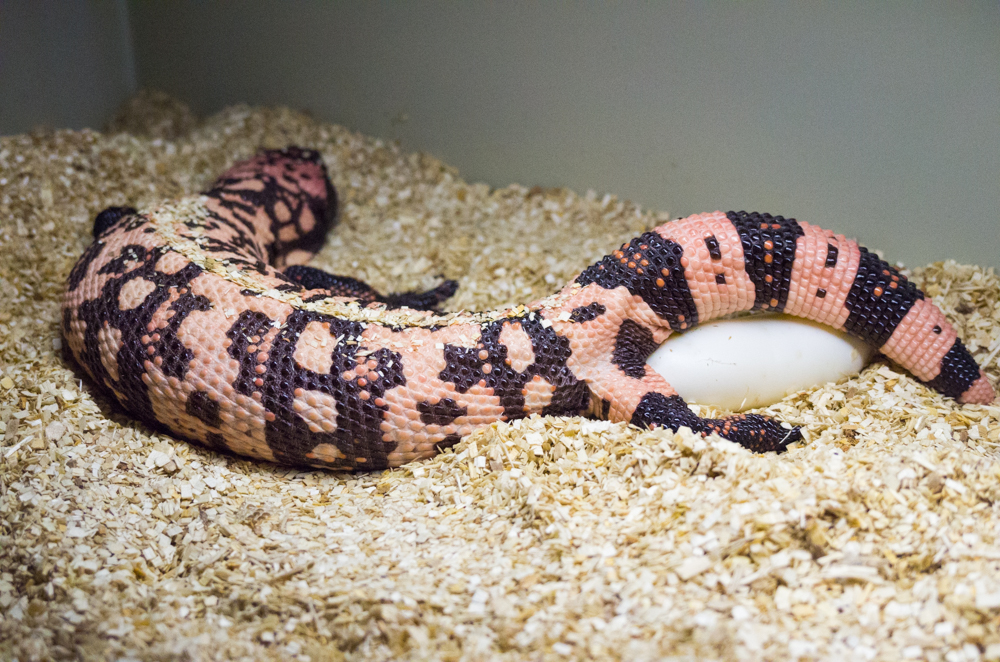
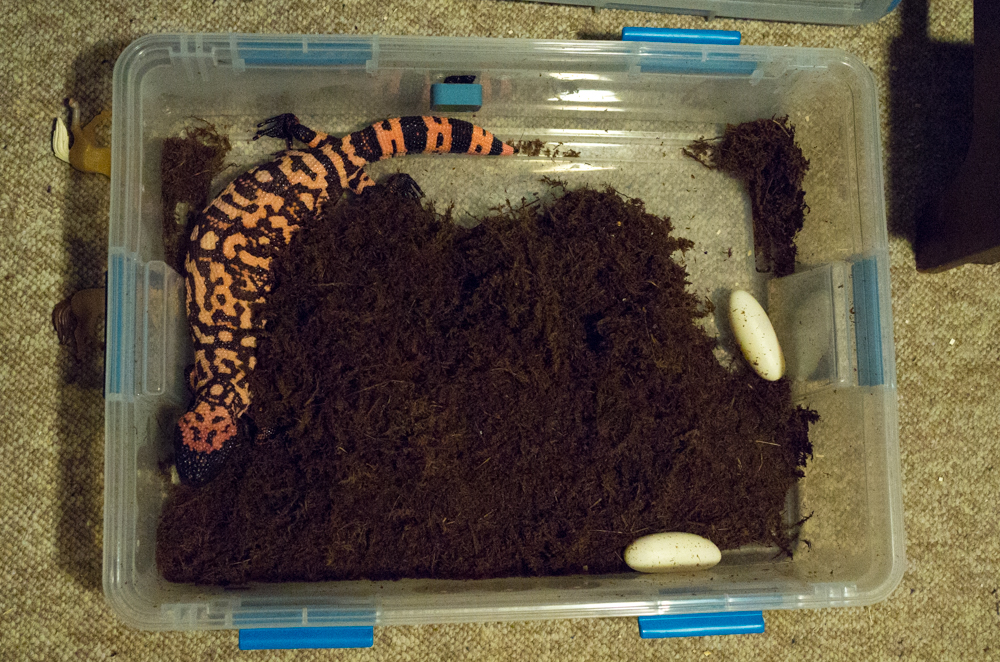
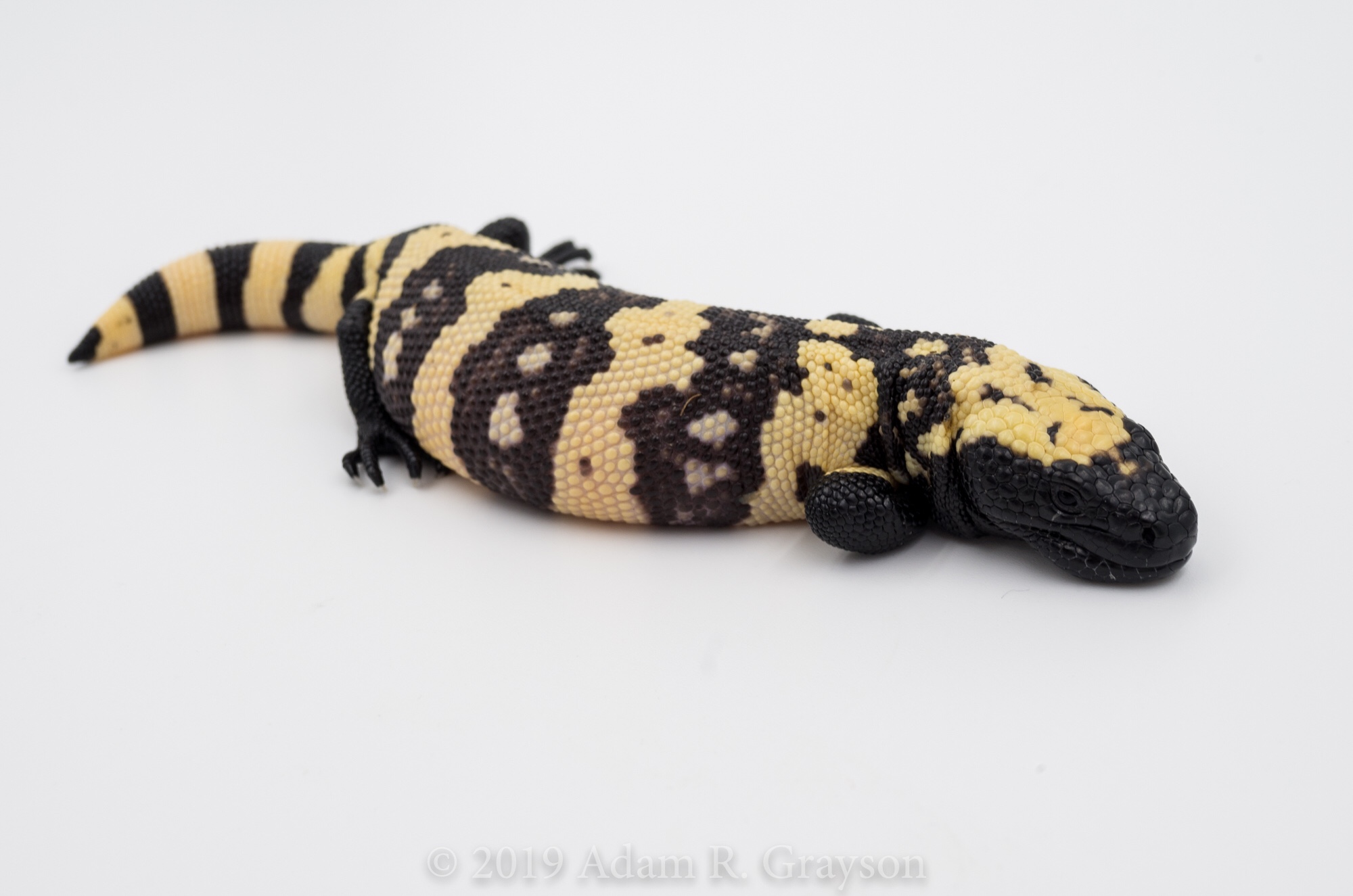
With the babies I’ve held back are growing like weeds and coloring up beautifully, I’ve taken the adults out of brumation and am warming them up and will be feeding them their first meal soon. I’m both excited and nervous as to how this season will turn out. Will all the eggs paid be fertile? Will all the fertile eggs go to term? An educated guess says no to both but if improvements are made I am moving in the right direction.
I’ll be doing some new things this year. First, I’ll be pairing straight reticulated with reticulated, and banded with banded. Also, instead of leaving switching males between cages I will keep one male with one female for the duration of the breeding season. The females do seem to have preferences, and hopefully they still lie each other this year. I am waiting until the last week of March to start pairing as last year the females were not receptive and often attacked and bit the unrelenting males so it would be nice to avoid this drama and potential injury. I’ll keep everyone posted on the progress and of any successes and failures on my second year of breeding these amazing Gila monsters!

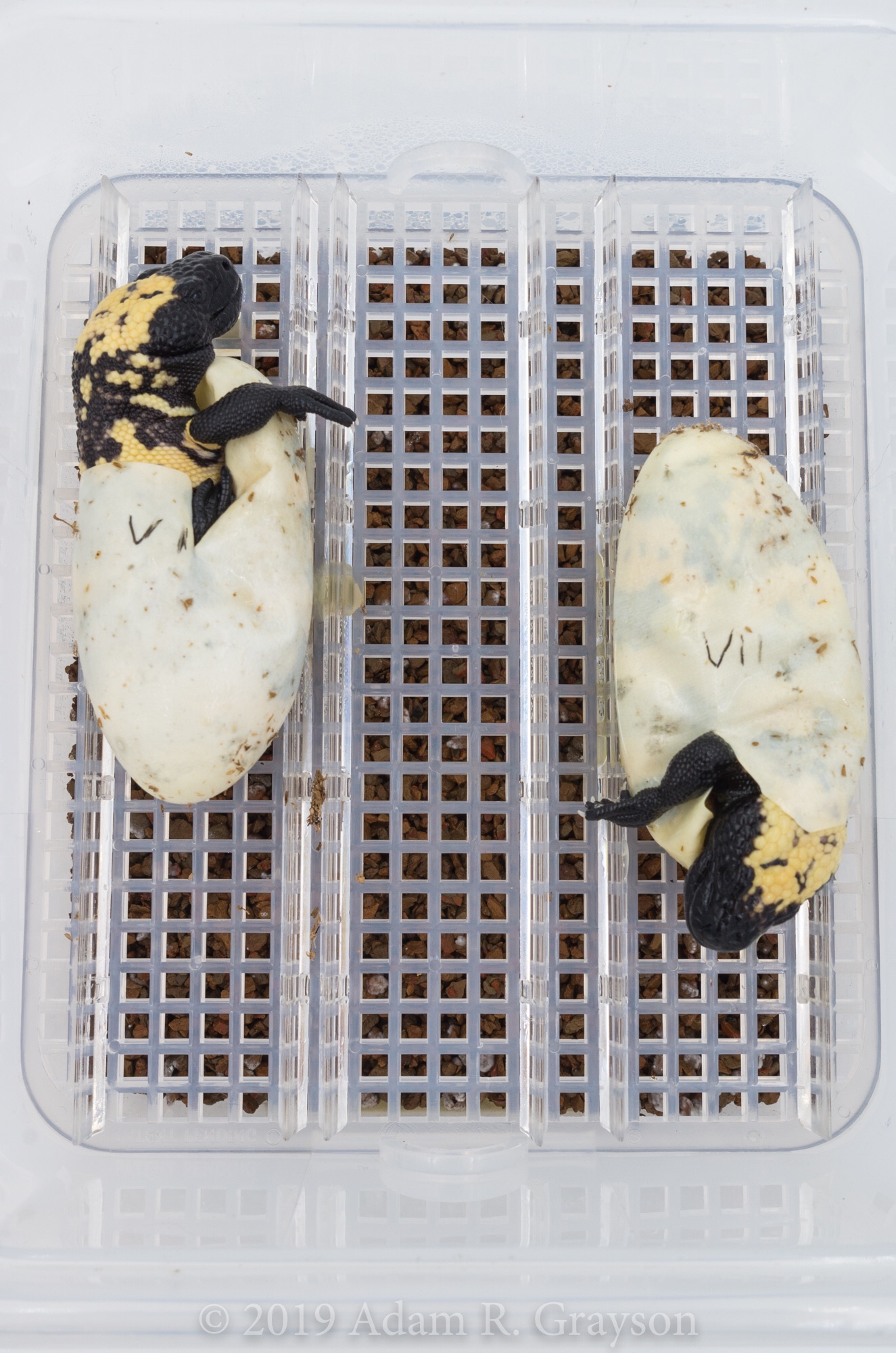

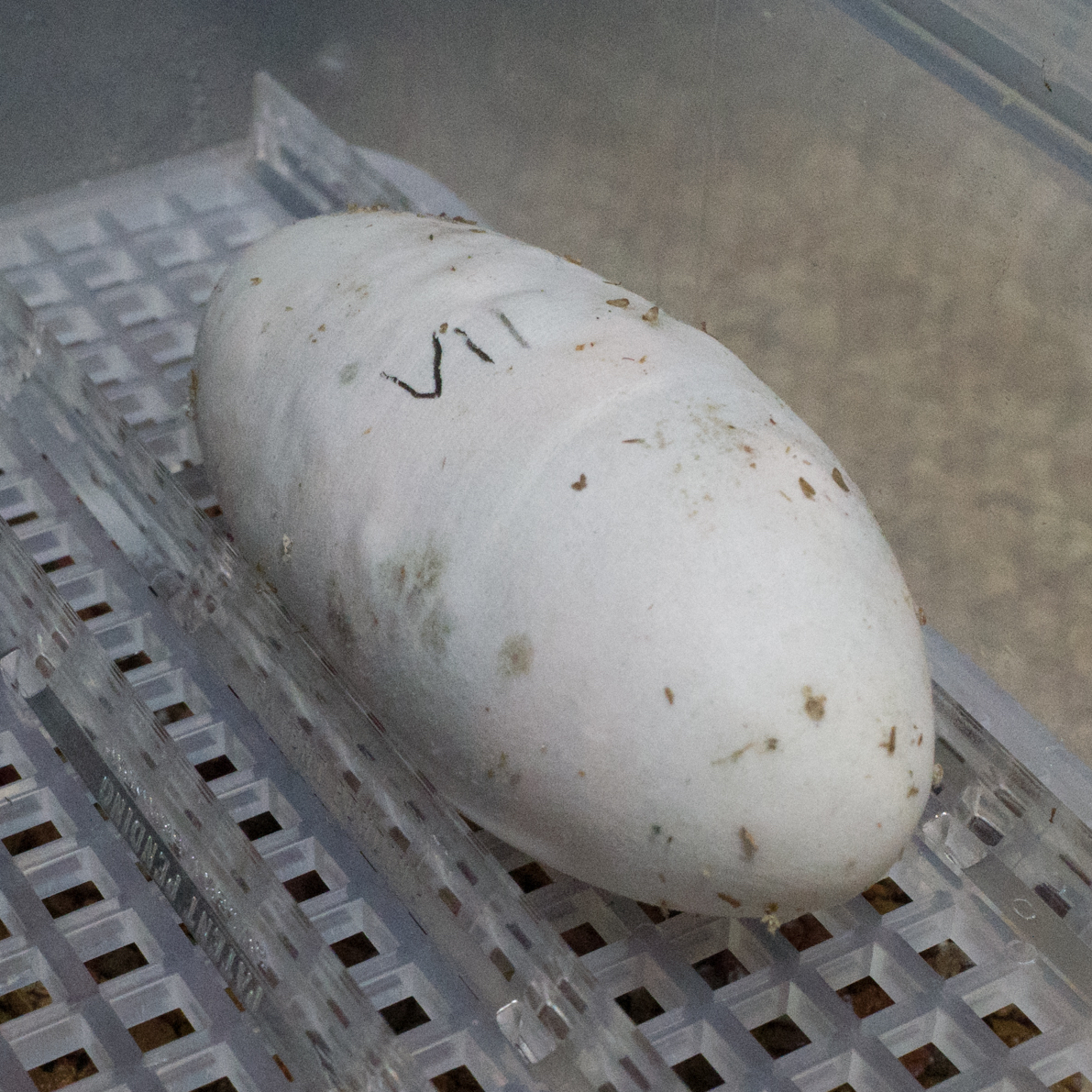 Patience. Patience is what those in the know say. Sure, I am checking the incubator at least ten times a day for any action and patience is not my virtue, but I am old enough to know when to listen. A couple a the eggs dented in over two weeks ago, the two others are starting to dimple (not dent) and in all honesty I would be surprised if any of them hatch at this point. If they do not hatch my biggest concern is figuring out where my failure was. Is it the incubator? No, the Grumbach’s are renowned for their reliability. Is it the S.I.M. egg container? No, these have been used successfully with Gila monsters before. My temperature, though low, should not be the issue and my humidity is spot on, so it shouldn’t be that. We just started having cold fronts move through and temps have fallen so that may have a slight play into it (I have ordered a space heater to remedy this issue). At this point my guess is that since the fan in the Grumbach is unplugged that there may not be enough airflow which may be an issue, or the fact that the Pangea Hatch medium has started to grow mold adds to this theory. I do open the incubator to allow fresh air to enter but it may not be enough. Whatever the case, I will hold on hope until the last egg turns yellow and starts to sweat. If they all die I will carefully review my protocols and notes and seek the advise of successful breeders to plan for a better year next season!
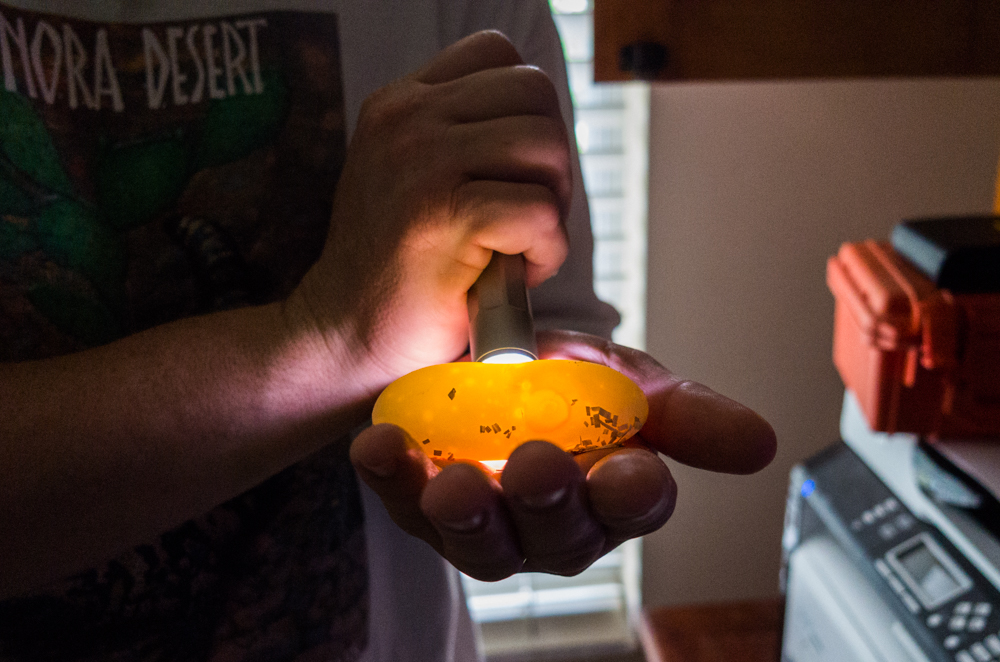
 Not much has happened since the last update; one good egg died leaving me eight healthy growing eggs in the Grumbach incubator. A universal agreement on Gila monster eggs is to leave them the F* alone during the long incubation time. I have a hard time doing this but have been a good bean and done so by only check through the incubator’s clear door and light to make sure none are dying. The Grumbach is holding temps and humidity as it should; Temperature ranges from 77.5˚F to 79.5˚F and humidity in the incubator stays at a steady ±90% RH (relative humidity) with the Squamata Concepts S.I.M. egg boxes at 100% RH. I have three SensorPush sensors (one in each egg box, one in the incubator) connected to a SensorPush Gateway to monitor temperature and humidity. And the Gilas? All are eating and back to normal, with the females gaining weight nicely. I still find it interesting how the feeding habits changed so much during the breeding season and look forward to more data next year from this interring period of time.